The Netherlands is a small country, but it leads the world in smart farming. Dutch farmers use advanced technology to create perfect growing conditions for crops inside greenhouses. This method is called controlled environment agriculture (CEA). They control almost everything: temperature, light, water, air, nutrients, and even CO2 levels. This helps them grow more food with less land, water, and chemicals.
In this article, we explain in simple words how Dutch agriculture uses technology to fully control the growing environment of crops. We look at real facts from experts like Wageningen University & Research (a top center for agriculture studies) and Dutch greenhouse companies.
Why the Netherlands Needs This Technology
The Netherlands is a small country with little farmland and often cloudy, rainy weather. Normal outdoor farming is hard here. But Dutch people found a smart way: build big glass houses (greenhouses) and use technology to make the inside perfect for plants.
Today, the country has thousands of hectares of high-tech greenhouses. These produce huge amounts of tomatoes, cucumbers, peppers, flowers, and more. The Netherlands is the world’s second-biggest exporter of farm products, even though it is small. Greenhouses help make high yields—like 10 times more food per hectare than traditional farms in many places.
This system saves resources too. It uses much less water and fewer pesticides than open fields.
The Greenhouse: The Base for Full Control
Dutch greenhouses are not simple glass houses. They are high-tech buildings, often called Venlo-type greenhouses. These have strong glass roofs and walls that let in lots of natural light but keep bad weather out.
Modern ones are semi-closed or closed systems. This means they seal the inside almost completely. Fresh air comes in through filters to stop bugs and diseases. This gives full control over the climate.
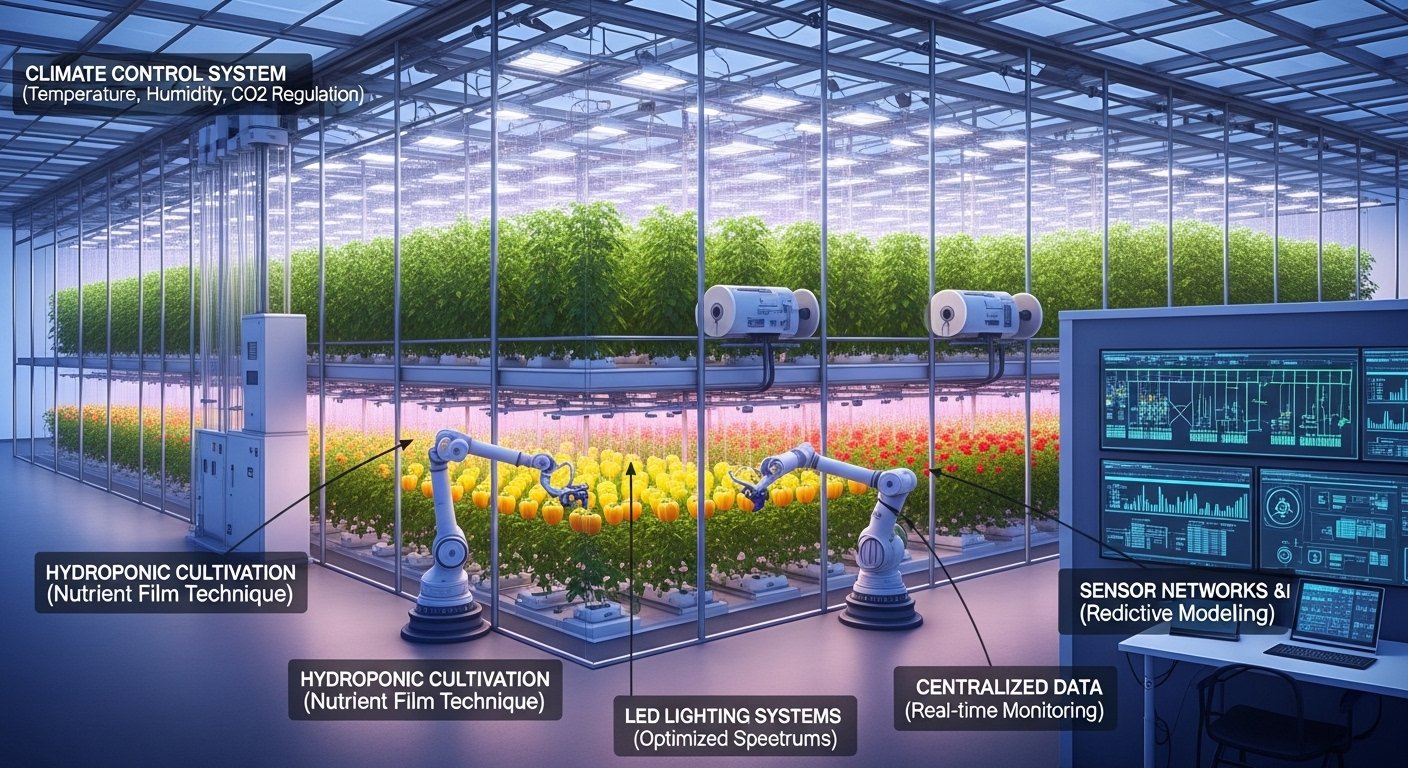
Screens (shades) go up and down automatically to control sunlight and heat. Ventilation systems move air to keep humidity right. Heating pipes in the floor or air warm the space in winter. Cooling systems help in summer.
All this creates a stable, perfect home for crops all year round—no matter if it snows or rains outside.
Controlling Temperature and Humidity
Temperature is very important for plants. Too hot or too cold stops growth or hurts crops.
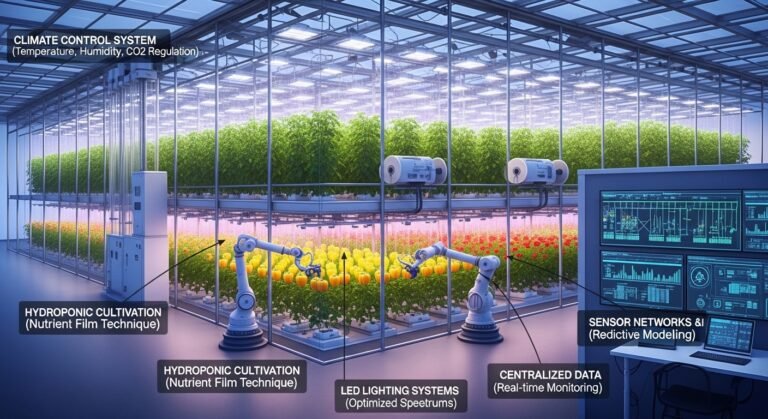
Dutch greenhouses use smart climate control computers. These connect to many sensors that check temperature, humidity, and wind every few seconds.
If it gets too hot, fans and cooling pads turn on. If cold, heaters start. Humidity control stops mold and helps plants “breathe” right (transpiration).
Some greenhouses use geothermal heat from deep underground hot water. This is clean energy and cuts fossil fuel use.
AI (artificial intelligence) now helps too. Systems like those from Priva or Hoogendoorn learn from data and make changes automatically. In tests at Wageningen, AI-controlled greenhouses grew crops with less energy and higher yields.
Lighting: Giving Plants Perfect Light All Day
In winter or cloudy days, natural light is low. Dutch growers add LED grow lights.
LEDs are special because growers pick exact colors (wavelengths) plants need most—like red for fruiting and blue for leaves. Purple or pink lights are common because they mix red and blue.
LEDs give light 24 hours if needed, but usually to add extra hours. They make little heat, so climate control is easier and saves energy.
New LEDs save up to 50% energy compared to old lamps. In some greenhouses, lights work with sensors to match plant needs exactly. This boosts growth by 20-30% in tests.
Companies like Heliospectra make smart systems that change light based on time of day or crop stage.
Water and Nutrients: Precision Feeding
Plants get water and food through roots. In Dutch greenhouses, most use hydroponics or soilless systems. Plants grow in rockwool, coconut fiber, or just water with nutrients.
This is better than soil because:
- No weeds or soil diseases.
- Full control of nutrients.
- Recycle water—up to 90% less water used.
Drip irrigation sends exact drops to each plant. Sensors check if plants need more water. Fertigation mixes nutrients in water automatically.
EC (electrical conductivity) and pH sensors keep nutrient levels perfect. Too much or too little hurts plants, so computers adjust in real time.
Closed systems collect extra water, clean it, and reuse it. This saves water and stops pollution.
CO2: Supercharging Plant Growth
Plants use CO2 to make food (photosynthesis). Normal air has about 400 ppm CO2. Dutch growers add more—up to 1000 ppm or higher.
They burn natural gas cleanly or use waste CO2 from factories. This boosts growth by 20-30%.
Climate computers add CO2 only when light is good (for photosynthesis) and close vents to keep it inside.
This is one big reason Dutch tomatoes yield so much—sometimes over 50-70 kg per square meter per year.
Automation and AI: The Brain of the System
Everything connects to computers. Sensors (70+ in some greenhouses) measure air, plant height, leaf wetness, and more.
AI and machine learning look at data and decide:
- When to open vents.
- How much light or CO2 to add.
- When to water.
In the Autonomous Greenhouse Challenge by Wageningen, teams use AI to grow lettuce or tomatoes fully automatic. Winners get higher profits with less energy.
Robots help too—planting seeds, picking fruits, or sorting. This cuts labor and makes work faster.
Sustainability and Future Steps
Dutch tech helps the environment:
- Less water (up to 90% savings).
- Fewer pesticides (integrated pest management with good bugs).
- Lower energy (LEDs, screens, geothermal).
- Higher yields without more land.
The goal is fossil-free greenhouses soon. Wageningen researches energy-neutral ideas, like solar panels on roofs that let plant light through.
New innovations include vertical farming (stacked layers) and more AI for zero-waste growing.
Explore More: Remote Information Technology Jobs: Top IT Work-From-Home Opportunities in 2026
Conclusion
Dutch agriculture shows how technology can fully control crop environments. From smart greenhouses to LEDs, hydroponics, CO2 dosing, and AI, everything works together for perfect conditions.
This makes the Netherlands a leader in efficient, sustainable farming. Other countries learn from it to grow more food with less harm to the planet.
With ongoing research from places like Wageningen University, the future looks bright for high-tech growing.
Disclaimer:
This article is for informational purposes only and is based on publicly available data from reliable sources such as Wageningen University & Research, industry reports, and established Dutch horticulture practices as of 2025-2026. It does not constitute professional agricultural, business, or investment advice. Farming methods can vary by location, regulations, and conditions; always consult qualified experts before implementing any techniques. No guarantees are made regarding outcomes, and readers assume all risks associated with application of the described methods.
About the Author

Mary Correa is a content writer with 9 years of experience. She loves writing about luxury villas and travel. Her articles are easy to read and full of exciting ideas. Mary helps readers discover amazing places to visit and stay. When she’s not writing, she enjoys exploring new destinations.