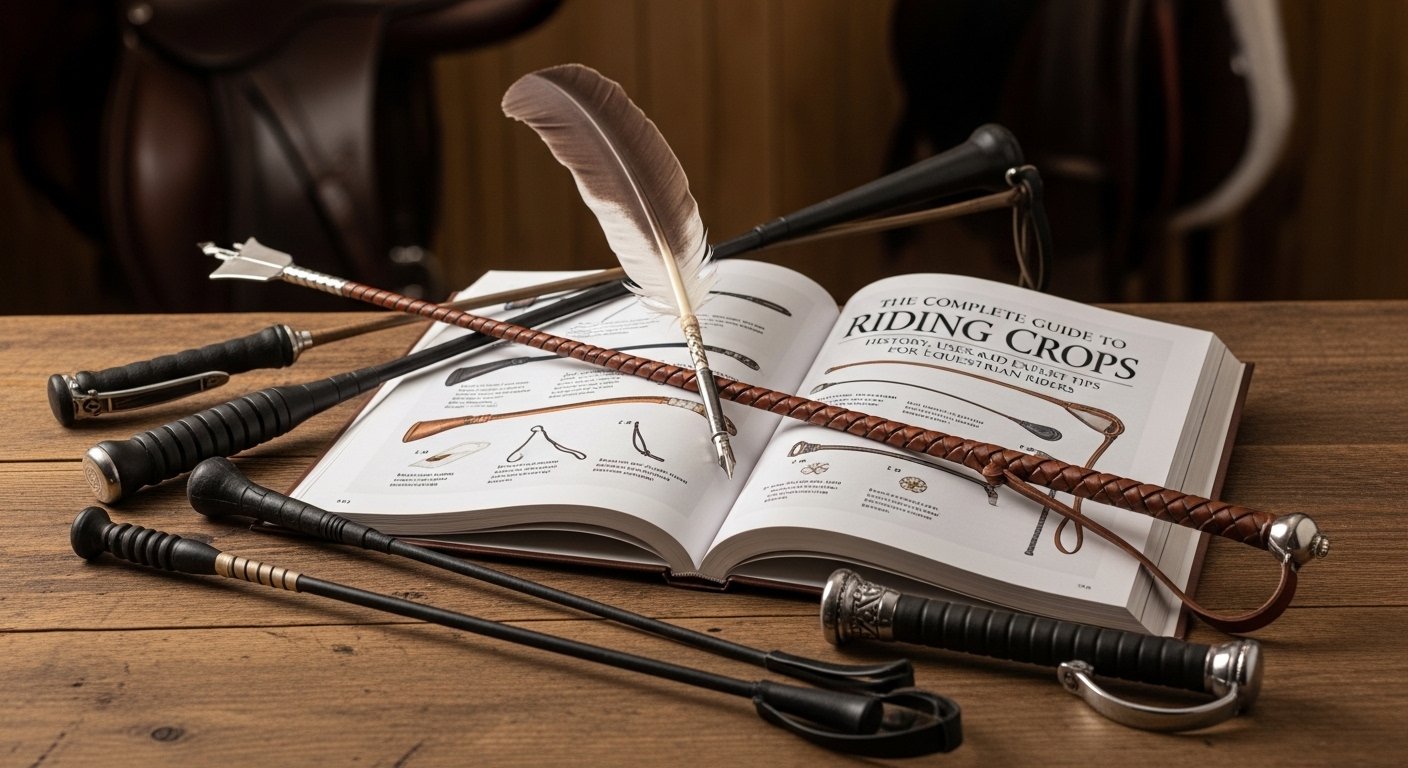
Riding crops are a common tool in horse riding. Many riders use them to help communicate better with their horses. This guide explains everything about riding crops in simple, easy English. We cover where they came from, what they are used for, how to use them the right way, and tips from experts. The goal is to help you understand and use them safely and kindly for your horse.
What Is a Riding Crop?
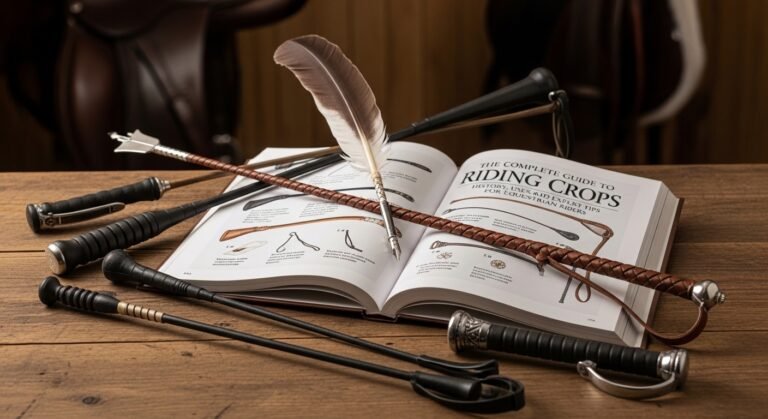
A riding crop is a short whip used in horse riding. It has no long lash like some whips. It usually has a handle at one end and a small flap or popper at the other. The length is often between 18 and 30 inches (about 45 to 75 cm).
People sometimes mix up “crop” and “whip.” A true riding crop is short and stiff. It gives quick taps close to the rider’s leg. A longer whip, like a dressage whip, reaches farther behind the leg. A jumping bat is a short, thick crop for jumping. It makes a louder sound when used.
Riding crops act as an extra aid. They back up your natural aids like legs, seat, and voice. They are not for punishment. Good riders use them to give clear signals and get a quick response from the horse.
A Short History of Riding Crops
Riding crops have a long past. People used whips and similar tools for horses many centuries ago.
In ancient times, riders used long whips to guide animals from far away. In the Middle Ages, some whips were like flagellums. These were used for riding but also had other meanings.
By the 1700s and 1800s, riding crops became popular in Europe. Hunters and riders in England used them during fox hunts. They were short so they did not get in the way. Some crops had fancy handles made of silver or brass. Famous people like George Washington owned special crops.
In the past, crops were sometimes loaded with metal for weight. They were even used as weapons in stories like Sherlock Holmes.
Over time, crops changed. They became lighter and focused on horse training. Today, they are made from fiberglass, cane, or leather. The focus is on kind use and horse welfare. Groups like the FEI (Fédération Equestre Internationale) set rules to protect horses.
Why Riders Use Riding Crops
Riding crops help in many ways:
- To reinforce leg aids. If your legs ask the horse to go forward and it ignores, a light tap reminds it.
- To encourage forward movement. Good for lazy or slow horses.
- To correct small issues. Like moving sideways or not listening.
- In jumping. A quick tap behind the leg helps with impulsion.
- For noise. The tap or pop sound wakes up the horse without much force.
The crop is always a second step. First, use your legs clearly. Give the horse time to respond. Only then use the crop if needed.
Never use it in anger. The goal is better communication, not pain.
Types of Riding Crops
There are a few main types. Each fits different riding styles.
Standard Riding Crop Most common type. Length 24-26 inches. Used for general riding, lessons, and flat work. It has a small leather flap at the end.
Jumping Bat Shorter and thicker. Often 18-24 inches. Made for show jumping. The wider end makes a louder pop sound. Helps with quick forward energy over fences.
Dressage Whip Longer (up to 43-47 inches with lash). Not a true crop but often grouped with them. Used in dressage. It reaches behind the leg without changing rein hold.
Hunting Crop Older style. Sometimes has a hook for opening gates. Less common now.
Choose based on your discipline. For beginners, start with a standard crop.
Many good brands exist. Look for ones with comfortable grips and strong but flexible shafts. Always buy from trusted equestrian shops.
How to Hold and Carry a Riding Crop
Holding it right keeps you safe and effective.
Most riders carry it in their dominant hand (right hand if right-handed). Grip the thick handle end. Let the crop rest along your thigh or point forward.
To hold with reins: Wrap fingers around reins and crop together. The crop should not stick up too high. This stops it from hitting your face if the horse stops fast.
Carry it on the outside of your leg. For right hand, it goes on the right side.
Switch hands if needed. For example, use left hand for left side aids.
How to Use a Riding Crop the Right Way
Use is simple but must be kind.
- Always ask first with natural aids. Squeeze legs, use seat, say “walk on.”
- Wait 2-3 seconds for response.
- If no response, give one clear tap behind your leg. Tap, not hit hard.
- Use the flat part or popper for contact.
- Tap once or twice max. Then go back to leg aids.
- Reward good response right away. Relax aids or praise.
Where to tap: Behind your lower leg, on the horse’s side. Never on the shoulder for forward (that’s more for noise in young horses). Never on sensitive areas like head or flanks.
For jumping: Tap behind leg before fence if horse hesitates.
Practice on yourself first. Tap your leg lightly. See how it feels. If it hurts you, it’s too hard for the horse.
Expert Tips for Better Use
Here are tips from experienced riders and trainers:
- Start light. Many horses only need a touch or sound.
- Be quick. The tap must come right after the leg aid. Horse must link them.
- Be consistent. Same rules every time.
- Train the horse to respond to legs first. Crop is backup.
- For young or green horses: Use crop more for noise than force.
- In lessons: Ask your instructor first if you need a crop.
- Change crops if one does not work. Some horses like softer pops.
- Always warm up without crop first.
Experts say: The best riders rarely need the crop. Good training means legs are enough.
Rules and Safety in Competitions
Rules protect horses.
In FEI events (like Olympics or big shows):
- Whips allowed in warm-up, not always in tests.
- Max length often 120 cm for dressage whips.
- No whips in some tests.
- Misuse leads to penalties or bans.
In show jumping: Crops up to 75 cm allowed. In eventing: Rules allow one whip in some phases.
Always check local rules. Groups like US Equestrian or your national body have details.
Safety first:
- Never leave marks or break skin.
- If horse gets upset, stop using it.
- Store crops safely. Do not leave where horse can step on it.
Caring for Your Riding Crop
Good care makes it last.
- Wipe after use. Remove dirt or sweat.
- Store in cool, dry place. Hang it up.
- Check for cracks. Replace if broken.
- Leather ones: Condition leather now and then.
- Avoid extreme heat or sun.
A well-kept crop works better and looks nice.
Common Mistakes to Avoid
- Using crop first instead of legs.
- Hitting too hard or too many times.
- Using when angry.
- Wrong place (like shoulder for forward).
- Ignoring horse’s reaction.
- Using old, broken crop.
Avoid these for happy horse and rider.
Explore More: Can Dogs Eat Cucumbers? A Simple Guide for Pet Owners
Final Thoughts
Riding crops are helpful tools when used right. They help you talk better to your horse. History shows they have been part of riding for a long time. Today, the focus is on kind, clear use.
Remember: Legs first. Crop second. Always think of horse welfare.
If you are new, practice with a trainer. They can show you hands-on.
With time, you may not need the crop much. That is the sign of good riding.
About the Author

Mary Correa is a content writer with 9 years of experience. She loves writing about luxury villas and travel. Her articles are easy to read and full of exciting ideas. Mary helps readers discover amazing places to visit and stay. When she’s not writing, she enjoys exploring new destinations.